Table of Contents
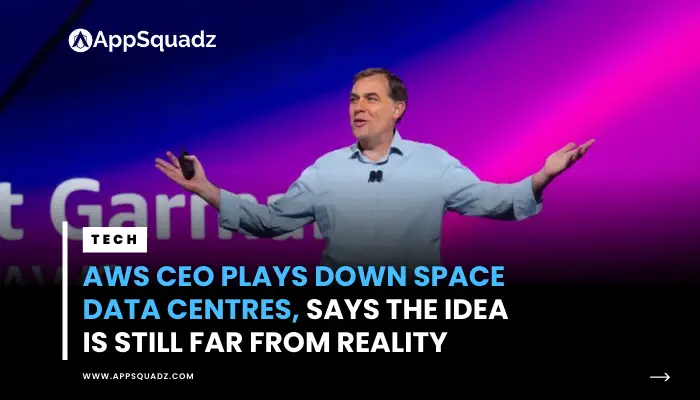
Amazon Web Services (AWS) CEO Matt Garman has poured cold water on the idea of building data centres in space, calling the concept “pretty far” from becoming a reality. His comments come at a time when the tech industry is searching for bold solutions to meet the exploding demand for computing power driven by artificial intelligence.
Why Space Data Centres Are Being Talked About
As AI and cloud computing continue to expand at a fast pace, traditional data centres on Earth are facing growing pressure due to massive power consumption and cooling needs. To address these challenges, some startups and industry leaders have floated the idea of hosting servers in orbit, suggesting that space could provide cooler conditions and access to abundant solar energy.
However, speaking at the Cisco AI Summit in San Francisco, Garman urged caution. While he acknowledged the creativity behind such concepts, he emphasised that building and maintaining data centres in space remains a distant and highly complex goal.
Garman: Rockets and Costs Are Major Barriers
Addressing reporters, Garman outlined the key obstacles standing in the way of orbital data centres, pointing to both logistical and financial challenges.
According to him, there are currently not enough rockets capable of launching the enormous amount of infrastructure required to support data centres in space. Additionally, the cost of sending heavy payloads into orbit remains extremely high, making the idea economically unviable for now.
“There are not enough rockets to launch a million satellites yet, so we’re, like, pretty far from that,” Garman said, adding that the expense involved in space launches makes the concept impractical at this stage.
Companies Still Exploring the Concept
Despite AWS taking a cautious view, other technology players continue to explore the possibility of space-based computing infrastructure.
Blue Origin, the space company founded by Amazon founder Jeff Bezos, has reportedly examined technologies related to the orbital data centres. Google has announced Project Suncatcher, an initiative aimed at testing space-based data centre technologies, potentially as early as next year. Meanwhile, Elon Musk’s SpaceX, which has recently merged with xAI, has also discussed space computing as a long-term option for scaling AI capabilities.
These developments indicate that while the idea is not ready for deployment, interest in space-based data infrastructure still remains strong among innovators.
AWS Focus Remains on Earthbound Growth
Garman’s comments make it even clearer that AWS is prioritising the expansion and improvement of its existing, Earth-based data centre network are investing more in near-term orbital solutions. As global demand for AI and cloud services continues to rise, AWS and other cloud providers are doubling down on land-based infrastructure that can deliver reliable performance today.
A Reality Check for the Future of Tech Infrastructure
Although the concept of data centres in space reflects the tech industry’s ambitious thinking, Garman’s remarks highlight the significant gap between vision and execution. For now, challenges such as high launch costs and limited rocket availability mean that Earth will continue to be the primary location for the world’s data infrastructure.