Table of Contents
- 1. Why Hybrid Cloud Is Becoming the Enterprise Standard
- 2. Bridging Legacy Infrastructure and Modern Cloud Environments
- 3. How AWS Supports Modern Hybrid Cloud Architectures
- 4. Moving Applications Without Disrupting Business Operations
- 5. How Hybrid Cloud Migration Supports Governance and Compliance
- 6. Common Roadblocks That Slow Enterprise Cloud Migration
- 7. The Strategic Value of Enterprise Cloud Migration Consulting
- 8. Building Cloud Migration Solutions for Long-Term Growth
- 9. Conclusion
- 10. FAQs
- 1. What is hybrid cloud migration?
- 2. Why are enterprises adopting hybrid cloud migration?
- 3. How does AWS support hybrid cloud migration?
- 4. What are the common challenges in enterprise cloud migration?
- 5. Why is cloud migration consulting important for enterprise projects?
- 6. How can organizations control AWS cloud migration costs in India?
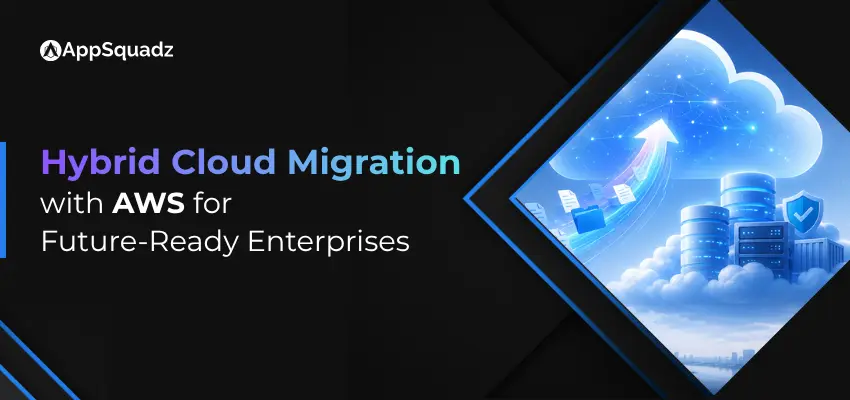
The process of hybrid cloud migration allows enterprises to upgrade their infrastructure while still taking advantage of their current assets. With legacy systems, changing compliance demands, and ever-increasing application requirements, most organizations are choosing hybrid environments that combine the cloud with traditional IT systems.
AWS is an important contributor to this transition because of its ability to make smooth connections between the cloud and the on-premises infrastructure. AWS, by being able to support connected and flexible architecture, enables the organization to transition at its own pace.
Why Hybrid Cloud Is Becoming the Enterprise Standard
Enterprise modernization usually does not happen in a single move. Many companies still depend on legacy applications, on-premise hardware, and critical business systems that cannot be replaced instantly. On the other hand, the increasing requirements of innovation, efficiency, and digitalization are prompting firms to implement cloud technology at a faster pace.
And this is where hybrid cloud migration is becoming increasingly popular. Instead of making a decision on whether to use on-premises infrastructure or the cloud, companies decide to combine both. This method gives businesses the ability to update their systems slowly, retain better control over sensitive information, and still utilize their technology assets.
This is why hybrid cloud has become an effective approach to implementing enterprise cloud migration and cloud infrastructure modernization, assisting companies in achieving a balance between modernization and continuity.
Bridging Legacy Infrastructure and Modern Cloud Environments
Modernization isn’t about doing everything at once. Many enterprise applications, databases, and infrastructure are critical for daily operations and cannot be moved to the cloud with one click.
Hybrid cloud migration helps organizations bridge this gap by:
- Extending the value of existing infrastructure investments
- Supporting gradual workload migration based on business priorities
- Reducing disruption to critical operations
- Creating a practical path toward cloud infrastructure modernization
Organizations can modernize at a pace that meets the needs of their operating and business objectives by bridging and leveraging legacy environments and modern cloud capabilities.
How AWS Supports Modern Hybrid Cloud Architectures
Hybrid IT management is not only about connecting on-premises technology to the cloud. Organizations require a platform capable of accommodating different types of workload, ensuring consistency, and making management easier. That’s why AWS is an integral part of most modern cloud migration solutions.
AWS supports hybrid cloud architectures by helping organizations:
- Run workloads across cloud and on-premises environments from a unified ecosystem
- Connect legacy applications with modern cloud services
- Maintain governance and operational visibility across the distributed infrastructure
- Scale resources based on changing business and workload requirements
- Modernize applications without requiring a complete infrastructure overhaul
By allowing hybrid cloud migration of existing systems into the cloud, AWS gives organizations the flexibility to increase their modernization pace without compromising operational stability.
Want to know how AWS consulting helps with cloud transformation initiatives? Check out our in-depth guide to why companies invest in AWS consulting services.
Moving Applications Without Disrupting Business Operations
One of the major worries involved in any migration process is the effect on the operations of the enterprise. Enterprise software typically serves to aid customer interactions, internal processes, and data management, which makes performance issues highly risky.
This is where hybrid cloud application migration provides a useful edge. Rather than migrating all applications at once, companies can undertake their migrations in phases according to their priorities and needs. With this approach, teams can test, validate, and optimize workloads through the entire migration process without causing any disruptions.
A phased migration approach enables enterprises to reduce the risks associated with operations, increase the performance of the workload, and help the enterprises reach their general enterprise cloud migration goals.
How Hybrid Cloud Migration Supports Governance and Compliance
With the expansion of organizations into on-premise and cloud-based computing, visibility and control become increasingly necessary. Enterprise cloud migration projects need to have governance models that enable efficiency and manage risks without affecting consistency in distributed computing environments.
Governance Across Distributed Infrastructure
Hybrid environments frequently engage multiple applications, platforms, and data sources. Governance policies enable organizations to manage resources, workloads, and standards as they navigate the hybrid cloud migration journey.
Meeting Compliance Requirements
Regulatory compliance remains an important factor when deciding on cloud usage. A strategically planned cloud migration with security compliance provides the framework for organizations to align modernization with industry regulations, corporate requirements, and data protection provisions.
Maintaining Data Control
Not all data and workloads can be considered alike. A hybrid system helps organizations decide what would be the most appropriate place for the data based on different requirements. Numerous businesses also use cloud migration consulting services to create governance models that balance modernization objectives with long-term control and compliance needs.
Planning Your Hybrid Cloud Journey?
Discover how hybrid cloud migration with AWS enables secure scaling and enterprise modernization.
Book a Cloud Consultation
Common Roadblocks That Slow Enterprise Cloud Migration
Even with an effective strategy, firms may experience challenges that might hinder modernization efforts. Early detection of such challenges is essential for better business planning and minimizing migration risk.
Legacy Application Dependencies
Enterprise applications have not always been created to be deployed on cloud systems. System dependencies may make migration planning complicated and elongate the process of implementation.
Security and Compliance Concerns
It is important for organizations that operate in regulated industries to make sure their migrations adhere to the organization’s policies and requirements in their industry. Governance and compliance considerations need to be taken care of from the beginning so that they do not cause costly delays.
Limited Visibility Across Infrastructure
Limited insights into workloads, application performance, and infrastructure dependencies can hinder an organization from properly prioritizing migration activities and identifying risks.
Resource and Skill Gaps
An effective enterprise cloud migration project requires knowledge in various areas such as architecture, security, operations, and workload management. Internal resource shortages could cause delays in making decisions and implementation.
Cost Planning and Optimization Challenges
The migration cost is also dependent on the workload’s complexity, the infrastructure needed, and future business objectives. Businesses must consider aspects like architectural planning, resource usage, and AWS cloud migration cost in India while formulating migration strategies.
The Strategic Value of Enterprise Cloud Migration Consulting
With the increasing complexity of hybrid systems, migration efforts not only need to be technically sound but must be aligned with corporate strategy, regulation, and modernization needs.
Good cloud migration consulting assists companies in developing well-thought-out migration plans, assessing workload suitability, analyzing possible risks, and creating governance models that will ensure sustained growth. It helps organizations make decisions about the entire migration process, instead of using a blanket strategy.
Key areas where consulting expertise adds value include:
- Migration strategy and roadmap planning
- Workload assessment and prioritization
- Architecture and governance design
- Risk mitigation and compliance planning
- Cost management and resource optimization
Consequently, many organizations are turning to enterprise cloud migration consulting in India to help them benefit from niche expertise, to expedite digital transformation, and to optimize migration results.
Building Cloud Migration Solutions for Long-Term Growth
A good migration strategy will have to accommodate not only present infrastructure needs but also future technological environment needs. As needs change, companies must have environments capable of coping with these changes. This is why long-term planning plays a crucial role in any hybrid cloud migration endeavor.
A good cloud migration solution should be one that is scalable, flexible, and provides business continuity. Organizations should not just consider workload movement but also how cloud and on-premises environments will coexist on the path to modernization, application development, and operational efficiency.
Through the alignment of their migration strategies with their long-term business objectives, companies can develop a technological foundation to help them continuously improve and innovate while optimizing the benefits of their cloud investments.
Most companies use cloud optimization services to increase the efficiency of workloads, manage their infrastructure costs, and get the best possible value from their hybrid clouds.
Conclusion
As technology ecosystems continue to evolve within organizations, hybrid cloud migration has become a feasible option for maintaining the balance between innovation and operational stability. With the addition of cloud flexibility to their current infrastructure investments, companies can ensure modernization at a rate that is consistent with their business strategy.
By using AWS, companies can develop a connected hybrid environment, optimize workload migration, and establish a better foundation for future growth. As an experienced cloud transformation partner, AppSquadz assists companies in handling difficult migration journeys, transforming their infrastructure, and deploying hybrid cloud architectures to meet their changing demands.
FAQs
1. What is hybrid cloud migration?
Ans: Hybrid cloud migration refers to the act of migrating an application, workload, or data from an organization’s own infrastructure to a cloud environment, while ensuring connectivity between both. The beauty of hybrid cloud migration is that it enables gradual transformation.
2. Why are enterprises adopting hybrid cloud migration?
Ans: Hybrid cloud migration is commonly used by many organizations to modernize infrastructure, promote business growth, increase operational flexibility, and maintain control over critical workloads that may need to stay on-premises.
3. How does AWS support hybrid cloud migration?
Ans: AWS offers services and solutions that enable companies to link their cloud and on-premises infrastructures, manage workloads across the infrastructure, and design hybrid solutions that support modernization initiatives in the long term.
4. What are the common challenges in enterprise cloud migration?
Ans: Some of the most common problems include issues with legacy applications, regulatory compliance, workload visualization, availability of resources, and difficulties in migration planning.
5. Why is cloud migration consulting important for enterprise projects?
Ans: Cloud migration consulting assists companies in assessing workloads, planning migrations, mitigating risks, and ensuring that cloud adoption strategies are consistent with business goals, increasing chances for success.
6. How can organizations control AWS cloud migration costs in India?
Ans: Organizations can control AWS cloud migration costs in India by performing workload assessment, allocating resources properly, adopting an appropriate migration strategy, and monitoring the usage of their infrastructure during the migration process.