Table of Contents
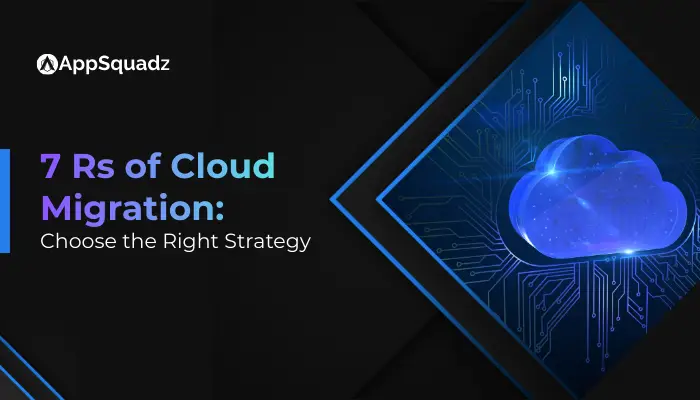
Cloud adoption is no longer optional for growth-focused enterprises. Organizations across industries are moving critical workloads to the cloud to improve agility, reduce infrastructure dependency, and accelerate digital transformation. However, migration without a clearly defined cloud migration strategy often leads to budget overruns, performance bottlenecks, and security gaps. This is where understanding the 7 Rs of cloud migration becomes essential.
A structured approach ensures that applications are assessed, prioritized, and migrated using the most suitable model rather than a one-size-fits-all method. Whether businesses choose rehosting for speed, refactoring for innovation, or repurchasing SaaS solutions for operational efficiency, strategic decision-making drives measurable outcomes.
For enterprises in India, where compliance, data localization, and cost optimization are critical, adopting the right cloud migration 7Rs framework helps reduce risk and maximize return on investment. Engaging experienced cloud migration consulting partners further strengthens planning, execution, and long-term scalability.
What Are the 7 Rs of Cloud Migration?
The 7 Rs of cloud migration represent a structured decision-making framework used to determine how applications and workloads should move to the cloud. Instead of treating migration as a simple lift-and-shift activity, this model enables organizations to evaluate each application based on business value, technical complexity, compliance requirements, and long-term scalability goals.
The framework was popularized through the Amazon Web Services cloud adoption methodology and is often referred to as the AWS 7Rs of migration. It plays a central role in 7rs in cloud migration planning, helping enterprises design a balanced and cost-effective cloud migration strategy.
Each option within the cloud migration 7Rs framework serves a distinct purpose. The right choice depends on factors such as modernization goals, regulatory requirements, operational readiness, and budget constraints. The seven approaches include:
- Rehost – Move applications without major changes
- Replatform – Make limited optimizations during migration
- Repurchase – Replace with SaaS solutions
- Refactor / Re-architect – Redesign for cloud-native capabilities
- Retire – Decommission unused applications
- Retain – Keep certain workloads on-premise
- Relocate – Move workloads at the infrastructure level
Understanding the 7Rs Migration Approaches
The seven strategies within the 7 Rs of cloud migration framework are not sequential steps but distinct decision paths. Each approach addresses a specific business scenario, application maturity level, and modernization objective. Enterprises typically apply a combination of these strategies across their application portfolio rather than relying on a single method.
The following sections explain each of the cloud migration’s 7Rs in detail, outlining when to use them, their key benefits, and how they fit into a well-defined cloud migration strategy.
Rehost:
Rehosting, or “lift and shift,” is the simplest approach within the 7 Rs of cloud migration framework. It involves moving applications to the cloud without modifying their architecture. The focus is speed and minimal disruption rather than modernization.
Organizations typically choose rehosting to quickly exit data centers, reduce infrastructure costs, or initiate their cloud migration strategy with lower risk. It works best for stable legacy systems that require scalability but not redesign.
Key Benefits:
- Faster migration timelines.
- Lower upfront effort.
- Minimal operational disruption.
- Quick infrastructure cost savings.
Replatform (Lift, Tinker, and Shift):
Replatforming, often called “lift, tinker, and shift,” is a practical approach within the 7 Rs of cloud migration framework. It involves migrating applications to the cloud while making limited optimizations to improve performance, scalability, or cost efficiency. The core architecture remains largely unchanged, but select enhancements are introduced to better leverage cloud capabilities.
Organizations typically choose replatforming when they want measurable cloud benefits without committing to full re-architecture. It works best for applications that can utilize AWS managed services or optimized configurations with minimal code adjustments.
Key Benefits:
- Improved performance and scalability.
- Better resource optimization.
- Reduced operational overhead.
- Faster modernization compared to full refactoring.
Repurchase (Drop and Shop):
Repurchasing, often referred to as “drop and shop,” is a strategy within the 7 Rs of cloud migration framework where an existing application is replaced with a cloud-based SaaS solution. Instead of migrating the legacy system, organizations move to a subscription-based platform that delivers similar or enhanced functionality.
Organizations typically choose repurchasing when legacy applications are costly to maintain, lack scalability, or no longer align with evolving business requirements. It works best for standardized functions such as CRM, HRMS, ERP, or collaboration tools where mature SaaS alternatives are readily available.
Key Benefits:
- Reduced maintenance and infrastructure burden.
- Access to regular feature updates.
- Predictable subscription-based costs.
- Faster functional modernization.
Refactor / Re-architect:
Refactoring, also known as re-architecting, is the most transformation-driven approach within the 7 Rs of cloud migration framework. It involves redesigning and rebuilding applications to fully leverage cloud-native capabilities such as microservices, containerization, serverless computing, and automated scaling. Unlike rehosting or replatforming, this strategy fundamentally changes the application architecture to optimize performance, agility, and innovation.
Organizations typically choose refactoring when long-term scalability, resilience, and competitive differentiation are priorities. It works best for mission-critical systems that must support rapid growth, high availability, and continuous feature deployment.
Key Benefits:
- Maximum scalability and performance optimization
- Improved resilience and fault tolerance
- Greater innovation flexibility
- Long-term cost efficiency through cloud-native design
Retire:
Retiring is a cost-optimization strategy within the 7 Rs of cloud migration framework that focuses on decommissioning applications that are no longer needed. During migration assessment, many enterprises discover redundant, outdated, or underutilized systems that continue to consume infrastructure resources and maintenance budgets.
Organizations typically choose to retire applications when they no longer deliver business value or when their functionality has been replaced by modern platforms. This step simplifies the IT landscape and reduces overall migration complexity.
Key Benefits:
- Reduced infrastructure and licensing costs
- Simplified application portfolio
- Lower security and compliance risk
- Improved operational efficiency
Retain:
Retaining involves keeping certain applications on-premise or in their existing environment instead of migrating them to the cloud. Within the 7 Rs of cloud migration strategy, this approach is used when workloads require strict compliance controls, low-latency access, or are tightly integrated with legacy systems.
Organizations typically retain workloads that are not cloud-ready or require further evaluation before migration. This supports a hybrid cloud model while maintaining business continuity.
Key Benefits:
- Maintains compliance and control
- Supports hybrid cloud architecture
- Reduces migration risk for complex systems
- Allows phased modernization planning
Relocate:
Relocating refers to moving workloads to cloud infrastructure without modifying the application or underlying architecture. Unlike rehosting at the application level, relocation often occurs at the infrastructure or virtualization layer, enabling large-scale workload movement with minimal changes.
Organizations typically choose relocation during data center exits or large infrastructure modernization initiatives. It is suitable for enterprises seeking operational flexibility without redesigning applications.
Key Benefits:
- Minimal application changes required
- Faster large-scale infrastructure transition
- Reduced data center dependency
- Lower immediate engineering effort
Accelerate Your Cloud Migration Journey
Build a secure, scalable, and cost-optimized cloud migration strategy with expert-led planning and execution.
Talk to Our Experts
How to Choose the Right Cloud Migration Strategy
Selecting the right approach within the 7 Rs of cloud migration framework requires structured analysis rather than assumption. A well-defined cloud migration strategy aligns technical decisions with business goals, compliance needs, and long-term scalability.
A balanced evaluation ensures that each workload follows the most suitable path within the 7 Rs cloud migration framework rather than a one-size-fits-all approach.
Key considerations for effective 7Rs in cloud migration planning include:
- Application Assessment: Evaluate architecture maturity, technical debt, integration dependencies, and modernization readiness before selecting among the cloud migration 7Rs.
- Business Impact Analysis: Determine workload criticality, acceptable downtime, performance expectations, and revenue impact to guide strategy selection.
- Compliance and Data Residency: Factor in regulatory obligations, industry standards, and localization requirements, especially when building a custom cloud migration plan in India.
- Cost and ROI Modeling: Compare the total cost of ownership across rehosting, replatforming, refactoring, or repurchasing to ensure financial feasibility.
- Scalability and Innovation Goals: Align migration decisions with future growth, digital transformation priorities, and competitive differentiation.
- Expert Guidance: Engage enterprise cloud migration consulting professionals and cloud data migration experts from India to reduce risk, design phased roadmaps, and optimize execution.
7Rs in Cloud Migration Planning for Indian Enterprises
Applying the 7 Rs of cloud migration in the Indian business environment requires a strategic and localized approach. While the cloud migration 7Rs framework provides global guidance, execution must align with regulatory, financial, and operational realities specific to India.
Key considerations for 7rs in cloud migration planning in India include:
- Regulatory Compliance and Data Localization: Address industry regulations and data residency requirements. Sensitive workloads may follow retain or hybrid strategies within the overall cloud migration strategy.
- Cost Optimization and ROI Focus: Prioritize budget efficiency by evaluating rehosting or replatforming before committing to large-scale refactoring. This supports a financially balanced custom cloud migration plan in India.
- Hybrid and Phased Migration Models: Adopt retain and relocate strategies where full migration is not immediately viable. Hybrid models are common in 7Rs in cloud migration planning across Indian enterprises.
- Scalability for Rapid Digital Growth: Select refactor or replatform approaches for high-growth sectors such as fintech, SaaS, and eCommerce that demand elastic infrastructure.
- Specialized Migration Expertise: Engage enterprise cloud migration consulting India partners and cloud data migration experts India to ensure structured execution, compliance alignment, and minimized migration risk.
Building a Custom Cloud Migration Plan in India
A successful cloud transformation requires more than selecting from the 7 Rs of cloud migration. It demands a structured, business-aligned roadmap tailored to operational, regulatory, and financial realities in India.
These are well-structured custom cloud migration plans ensures predictable execution and sustainable cloud performance in India:
- Comprehensive Application Portfolio Assessment: Analyze application dependencies, performance baselines, security posture, and modernization readiness before mapping workloads to the cloud migration 7Rs.
- Define Business Objectives and KPIs: Align migration goals with measurable outcomes such as cost reduction, scalability improvement, resilience, or faster time-to-market.
- Compliance and Risk Evaluation: Incorporate data residency, sector-specific regulations, and governance policies into the cloud migration strategy.
- Phased Migration Roadmap: Design a prioritized execution plan that balances quick wins like rehosting with long-term modernization through refactoring.
- Partner with Experts: Collaborate with enterprise cloud migration consulting India providers and cloud data migration experts India to ensure technical precision and minimize disruption.
Common Mistakes to Avoid in Cloud Migration
Even with the right framework, poor execution can derail cloud initiatives. Avoid these common pitfalls when implementing the 7 Rs cloud migration approach:
- Migrating Without Proper Assessment: Skipping a detailed evaluation leads to wrong strategy selection within the cloud migration 7Rs.
- Ignoring Cost Modeling: Failure to forecast operational expenses can result in higher-than-expected cloud bills.
- Overlooking Security and Compliance: Security architecture must be redesigned for cloud environments rather than replicated from on-premise setups.
- Lack of Governance and Monitoring: Absence of performance tracking and policy enforcement increases operational risk.
- No Post-Migration Optimization Plan: Cloud migration is not a one-time activity. Continuous optimization is essential for long-term ROI.
FAQ’s
1. What are the 7 Rs of cloud migration?
Ans. The 7 Rs include Rehost, Replatform, Repurchase, Refactor, Retire, Retain, and Relocate. They help organizations determine the most suitable cloud migration strategy for each workload.
2. How do AWS 7Rs of migration support enterprises?
Ans. The AWS 7Rs of migration framework provides structured guidance for assessing applications and selecting the appropriate migration path based on technical and business needs.
3. Why is a custom cloud migration plan important in India?
Ans. A custom cloud migration plan in India ensures compliance with data localization laws, cost optimization, and alignment with sector-specific regulations.
4. When should a company choose refactoring over rehosting?
Ans. Refactoring is ideal when long-term scalability, performance optimization, and cloud-native innovation are strategic priorities.
5. Why hire enterprise cloud migration consulting India experts?
Ans. Specialized consultants and cloud data migration experts in India reduce migration risk, design phased roadmaps, and optimize cloud performance post-migration.