
Scaling India's Skilling Backbone
(Infrastructure Designed to Serve at the Scale of a National Mission)
~ 14.39M
Website visits
~ 252K
Peak concurrent users
~ 2.18M
Results downloaded
0
Production incidents
Client Overview
The National Skill Development Corporation (NSDC) operates under the Ministry of Skill Development and Entrepreneurship (MSDE), Government of India, to build the country's skilling, education, employment and entrepreneurship ecosystem. Its flagship platform, the Skill India Digital Hub (SIDH) is India's Digital Public Infrastructure (DPI) for skilling, a unified, Aadhaar-linked platform consolidating schemes such as PMKVY, NAPS and DDU-GKY for citizens nationwide.
AppSquadz partnered with NSDC to operate and scale the AWS infrastructure behind SIDH and the ITI ecosystem to meet a simple standard that no citizen should be turned away, no matter the scale of demand.
Client
National Skill Development Corporation (NSDC)
Industry
Government / Public Sector
Requirement
No Surprises at Peak Load: Scaling SIDH & ITI Exam Portal for ITI Result Day. Handle national-scale traffic surges with zero downtime while staying fully interoperable within India's DPI ecosystem.
Have a similar requirement?
Get in touch with us →
Executive Summary
SIDH is positioned as India's national DPI for skilling, education, employment and entrepreneurship, built to be interoperable with other government digital systems rather than operate as a closed application. It integrates Aadhaar-based eKYC and connects learners with training providers, assessors and employers across the country.
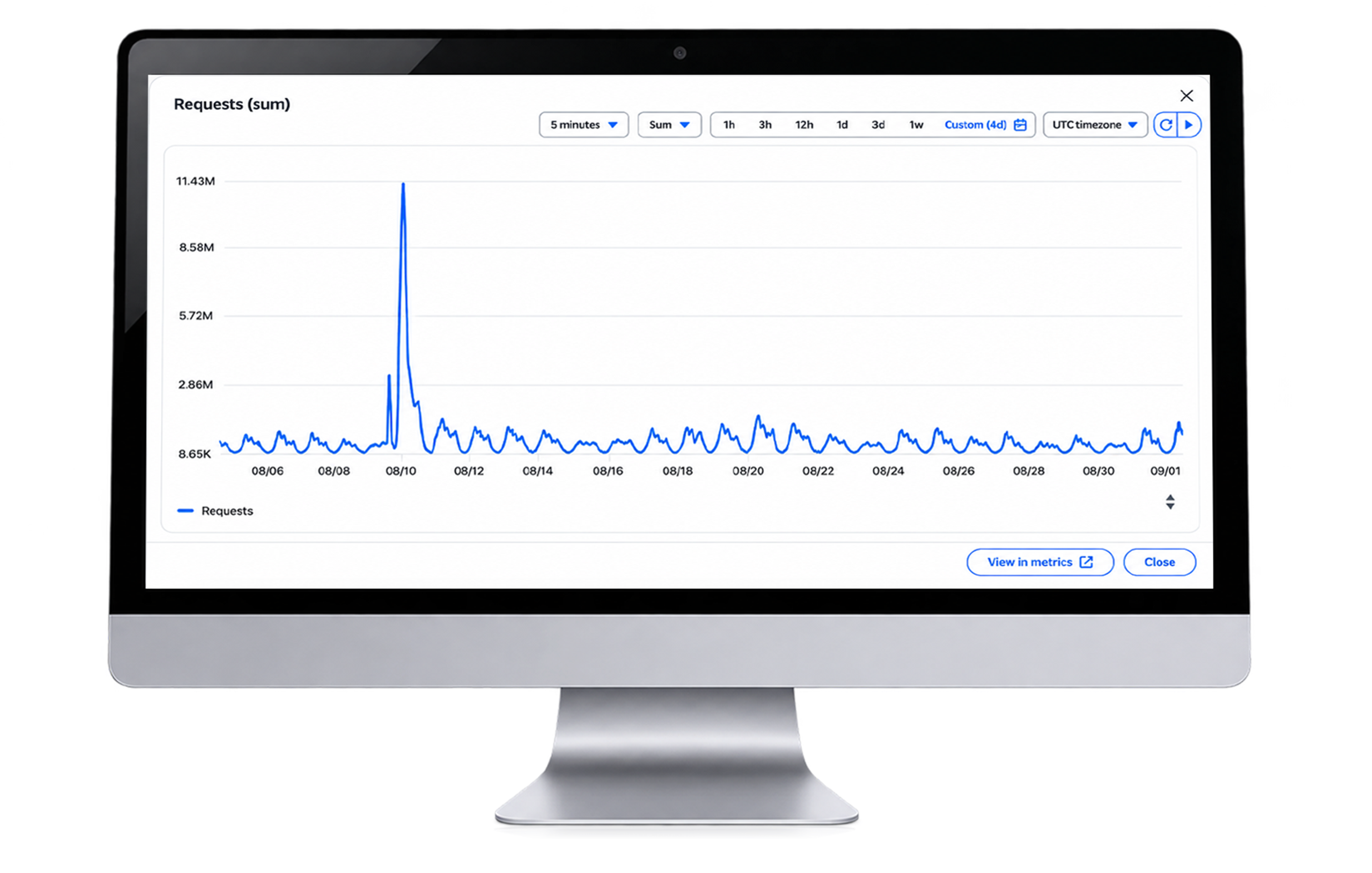
During the peak event window, the platform supported approximately 14.39 million visits, handled a peak of 252K concurrent users, and downloaded 2.18 million results. The platform remained fully operational throughout, with ZERO incidents.
This case study covers how the underlying AWS infrastructure was scaled to support that growth, and how it performed under the platform's highest-ever traffic during the ITI Exam Result Day without downtime.
About the Event
ITI Examination Result Day 2026 marked one of the most significant traffic events in SIDH's operational history. As results were declared for Industrial Training Institutes across the country, students from every state and union territory turned to the platform simultaneously, logging in to the ITI portal and accessing their results in real time. The event is emblematic of the platform's broader role: a single digital front door through which citizens across a geographically and linguistically diverse country access a time-critical government service, with no tolerance for delay or downtime. Recognizing the scale and unpredictability inherent to a national result-declaration event, the AppSquadz Team executed a structured readiness program in the lead-up to Result Day.
The scale of citizen participation this year reflects the platform's continued growth in reach and criticality. In the previous year's ITI Result Day, SIDH and the ITI Portal together recorded 900K website visits and approximately 150,000 peak concurrent users, and 1.90 million results downloaded. This year's event substantially exceeded those figures across every dimension.
Challenges They Faced
SIDH and the ITI Portal are live, national-scale, citizen-facing platforms that cannot tolerate downtime, especially around ministry-driven events like exam result announcements, when traffic spikes sharply and without warning. Scaling the infrastructure to support this required solution for:
- Unpredictable, event-driven concurrency spikes: exam result announcements drive citizen traffic far above day-to-day baselines within minutes.
- Database Optimization: Tuning query performance and DB read-replica distribution to sustain high-concurrency read patterns without degradation.
- Zero tolerance for downtime: as citizen-facing DPI, any outage directly affects a learner's or institute's access to a government service.
Solutions We Offered
- Compute Scaling for Unpredictable, event-driven concurrency spikes: SIDH and the ITI Portal run on independently scaled AWS ROSA (Red Hat OpenShift Service on AWS) clusters, each configured with dedicated autoscaling policies sized to their distinct traffic profiles:
- SIDH Cluster auto-scales between a minimum of 60 nodes, up to 75 on a normal day, and up to 85 during high-traffic events like Result Day.
- ITI Examination Cluster auto-scales between a minimum of 9 nodes, up to 12 on a normal day, and up to 24 during high-traffic events.
- Database Optimization: On the data layer, both platforms' databases are purpose-built for their access pattern:
- SIDH runs a PostgreSQL cluster for the user database.
- The ITI Exam portal runs a MongoDB cluster with multiple read replicas for student records, distributing read-heavy result-day queries across replicas to keep response times steady under peak concurrent load.
- Redis is used for caching for both portals, reducing backend database load during peak windows.
- Zero tolerance for downtime: Availability was engineered at multiple layers rather than relying on any single safeguard:
- Pre-emptive capacity planning: Reserving load balancer capacity units ahead of the anticipated surge, ensuring the load balancer layer itself had pre-provisioned headroom rather than scaling reactively under load.
- Multi-layer autoscaling: ROSA cluster-level node autoscaling combined with pod-level autoscaling meant capacity could grow at both the infrastructure and application layer in response to real-time demand.
- Edge protection and traffic shaping: AWS WAF and AWS Shield sat in front of both platforms, absorbing and filtering malicious or abusive traffic so legitimate citizen requests weren't crowded out during the highest-visibility window of the year.
- Continuous security and health monitoring: GuardDuty, Security Hub, and Inspector provided ongoing visibility into the environment's security posture, while [CloudWatch & Zabbix dashboards, alerting thresholds] gave the operations team real-time insight into system health throughout the event, enabling rapid intervention if any component showed early signs of strain.
- Two distinct traffic profiles: SIDH and ITI Portal supported on a shared, secure AWS foundation, deployed on separate AWS accounts & ROSA clusters to ensure that a surge on one platform never consumes compute capacity needed by the other. Each system scales purely based on its own demand curve. At the same time, the two platforms remain fully interoperable through the platform's login-redirect flow.
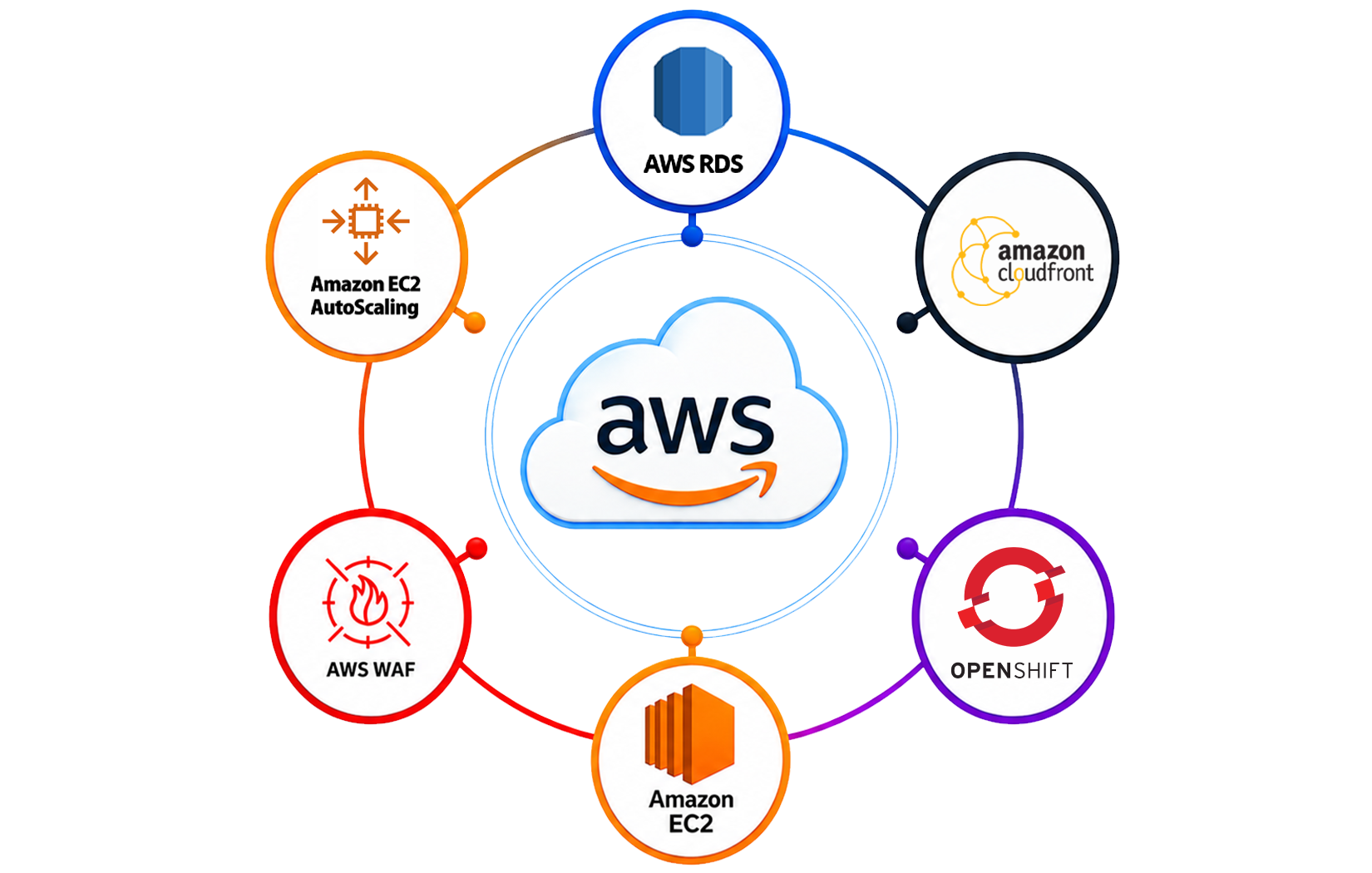
AWS Services Used
Performance at Peak Traffic
- Uninterrupted access to a national DPI service during its highest-traffic event to date.
- Demonstrated headroom for future scheme launches and citizen-facing events at similar or greater scale.
Summary
InfoRequest counts for all traffic during the specified time range.
Total
81.89M
Compared to
3.13M
Allowed
81.87M
Compared to
3.12M
Blocked
24.03K
Compared to
1.32K
Challenged
602
Compared to
9.36K
Results
Sustained approximately 14.39 million website visits across SIDH and the ITI Portal during the event window, without service degradation.
Handled peak concurrency of 252K users, maintaining stable response times throughout.
Approximately 2.18 million results accessed/downloaded by students from the ITI Portal. This figure represents the cumulative total over the event window, not peak concurrent activity.
Sustained a peak request rate of 7.31 million requests at the height of the event.
Recorded zero production incidents and security events throughout Result Day, despite record-breaking demand.

Vishal Deep Prajapati
Chief Technology Officer, DevOps
Project Delivery Leadership
Vishal Deep Prajapati is the CTO at AppSquadz, leading DevOps and cloud infrastructure with a strong focus on building secure, scalable, and reliable AWS environments. For the NSDC Skill India Digital Hub (SIDH) and ITI Portal, Vishal played a key role in preparing the infrastructure for ITI Examination Result Day 2026, one of the platforms’ most significant high-traffic events. The engagement involved strengthening infrastructure capacity across two platforms with distinct traffic profiles, optimizing database performance, enabling continuous monitoring, and ensuring both systems could scale independently based on demand. Through structured infrastructure readiness and coordinated event-day operations, the platforms successfully supported millions of students accessing their ITI examination results without downtime.
AWS & Cloud Infrastructure • DevOps & Infrastructure Operations • High-Traffic Platform Readiness • Scalability & Reliability
Your Next Big Solution Starts Here!
Connect with our experts today and let us help you craft seamless, high-performance solutions that drive success.
Get in Touch with Our Experts
Whether you have a project in mind, a query, or simply want to explore how we can collaborate, we’re here to help.